Skincare for Dry and Dehydrated Skin in Pakistan
Skin that feels tight after washing, looks dull by afternoon or flakes around the nose and cheeks is asking for help. The cause is not always the same, which is why the right routine starts with understanding what your skin is actually missing.
Ola’s dryness and dehydration range keeps things simple. A gentle cleanser that does not strip the skin, a lightweight moisturizer that supports the barrier, and a cream for the hands and feet, which are often the driest areas of all. Together they give dry skin a routine it can keep up with in Pakistan’s heat, air conditioning and winter dryness.
Dry Skin vs Dehydrated Skin: What Is the Difference?
The two terms are often used as if they mean the same thing, but they describe different problems. Dry skin is a skin type, which means it does not produce enough natural oil. Dehydrated skin is a condition, which means it lacks water, and any skin type can be dehydrated, including oily skin.
Dry skin tends to feel rough, flaky and tight all the time. Dehydrated skin often looks dull, feels tight in some areas, and may show fine surface lines even when it is still producing oil. Many people have both at once, which is why a routine that adds water and also protects the barrier works better than a rich cream alone.
Why Skin Gets Dry and Dehydrated in Pakistan
Climate plays a big part. Air conditioning in offices, cars and bedrooms pulls moisture from the skin through the day. Winters in Lahore, Islamabad and the northern regions are cold and dry. Strong sun adds stress, and hot showers and harsh face washes remove the oils that keep water in.
Over-cleansing and over-exfoliating are the other common causes. When the skin barrier is weakened, water escapes faster, and skin becomes tight, sensitive and reactive. Understanding the cause helps you choose gentler habits, not just richer products.
What Helps Dry and Dehydrated Skin
Good care for dry skin follows a simple logic with three kinds of ingredients. Humectants, such as hyaluronic acid and glycerin, draw water into the skin. Emollients and barrier lipids, such as ceramides and shea butter, smooth and strengthen the skin. Occlusive ingredients help hold moisture in so it does not evaporate. A routine that includes all three tends to work better than one product used alone.
Ola Products for Dry and Dehydrated Skin
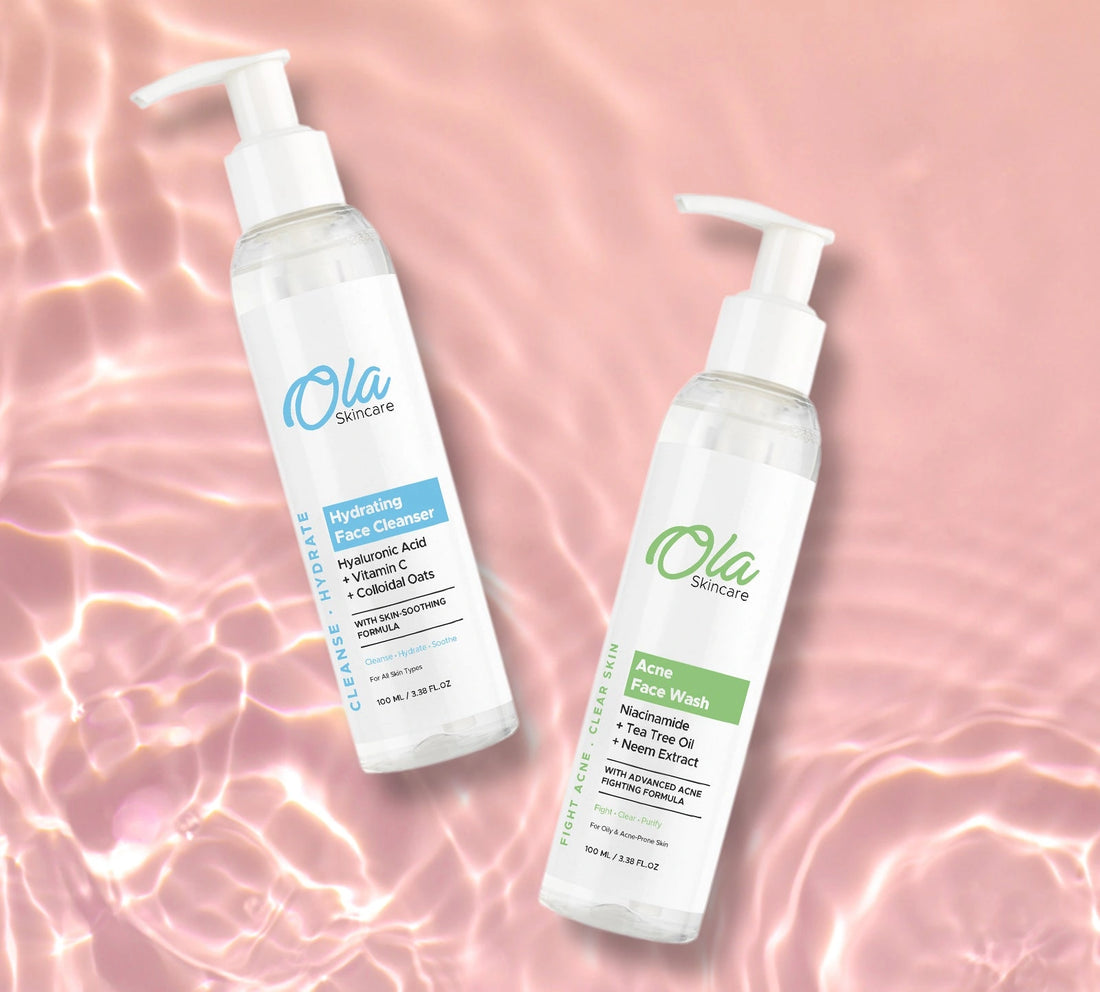
Hydrating Face Cleanser
Cleansing sets the tone for the whole routine. Ola’s hyaluronic acid face wash combines hyaluronic acid with vitamin C, colloidal oats and green tea extract, so it cleans without leaving skin feeling stripped. It suits dry, dehydrated and sensitive skin, and it prepares the skin for the serum and moisturizer that follow.
Calming Moisturizer
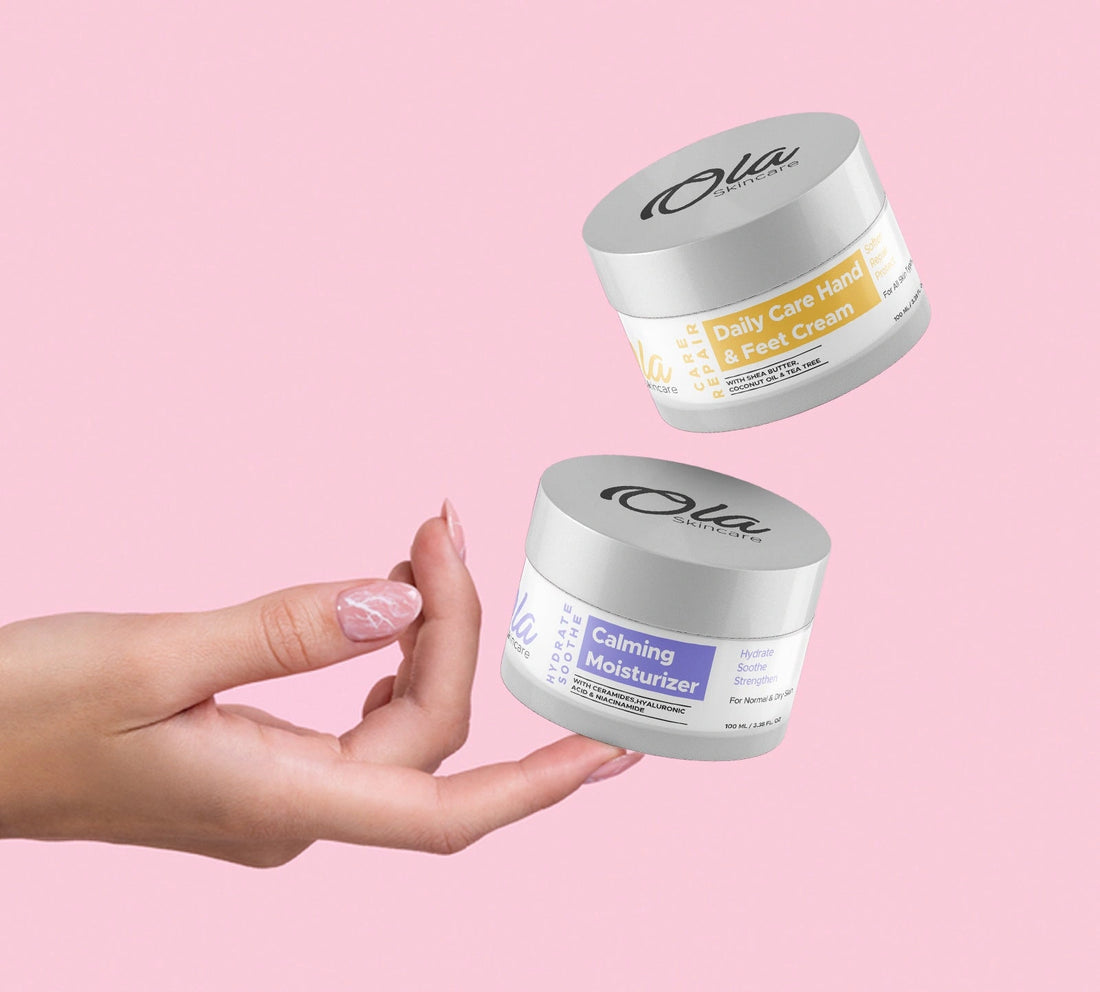
The Calming Moisturizer is built around ceramides and hyaluronic acid, with niacinamide, panthenol (vitamin B5), vitamin E and allantoin. It is designed to calm irritation, hold in moisture and support the skin’s natural barrier, and it stays lightweight and non-greasy for daily use on normal and dry skin. Read more about the ceramide moisturizer for dry skin if barrier support is your main goal.
Daily Care Hand & Feet Cream
Hands and feet get washed constantly and have few oil glands, so they dry out first. This 100 ml cream is made with shea butter, coconut oil, beeswax, tea tree and herbal extracts to soften rough, dry skin. It is non-greasy and absorbs quickly, and you can use it morning and night or as often as needed.
A Simple Routine for Dry and Dehydrated Skin
Morning
Cleanse with a gentle cleanser, apply a hydrating serum if you use one, then moisturize. Finish with sunscreen, since UV exposure makes dryness and sensitivity worse.
Evening
Cleanse thoroughly to remove sunscreen and the day’s pollution, then moisturize while your skin is still slightly damp. Apply hand and feet cream before bed so it can work overnight.
When Dryness Needs More Support
If your skin stays tight, red or stingy after a few weeks, it may have a weakened barrier. Our skin barrier repair products are built for that situation, with a serum, cleanser and moisturizer designed to work together.
Common Mistakes With Dry Skin
Using very hot water is the most common one, followed by washing too often and scrubbing. Skipping moisturizer on days when skin feels fine is another. Switching products every week also stops you from seeing what works. Give a gentle routine three to four weeks before you judge it.
When to See a Dermatologist
This page offers general skincare information, not medical advice. If your skin is cracked, bleeding, very itchy, or has patches that do not improve with gentle care, see a dermatologist. Conditions such as eczema can look like ordinary dryness and need proper diagnosis.
Frequently Asked Questions
What is the difference between dry and dehydrated skin?
Dry skin lacks oil and is a skin type. Dehydrated skin lacks water and is a condition that any skin type can have, including oily skin.
Can oily skin be dehydrated?
Yes. Oily skin can feel tight and look dull because it lacks water, even though it produces plenty of oil. A lightweight, hydrating routine helps.
What is the best moisturizer for dry skin?
Look for a barrier-supporting moisturizer with ceramides and hyaluronic acid that feels comfortable enough to use every day. The Calming Moisturizer is designed for this.
How often should I moisturize dry skin?
Twice a day, in the morning and at night, ideally on slightly damp skin. Reapply to the hands whenever they feel dry.
How long does it take to see a difference?
Most people feel more comfortable within a week or two, while a damaged barrier can take several weeks to recover.