


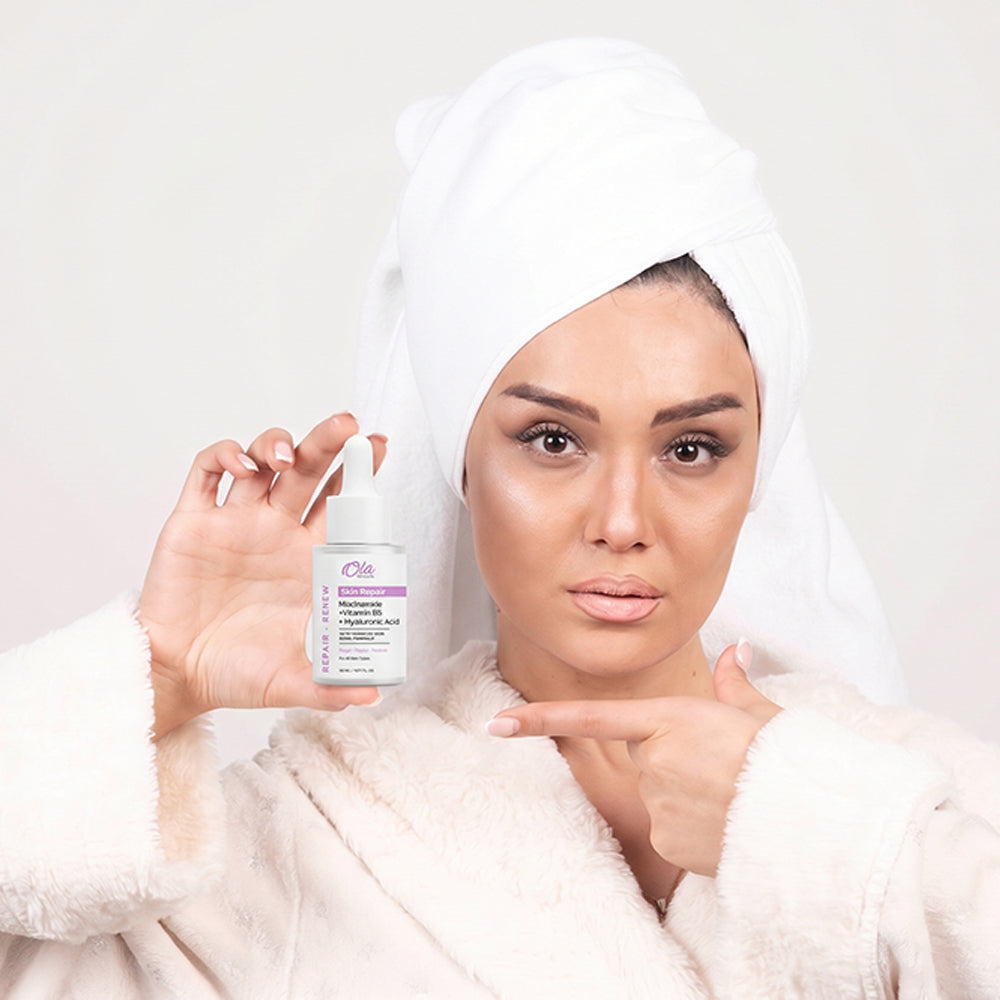
To use a barrier repair serum properly, apply two to three drops to clean, slightly damp skin, follow with a moisturizer, and finish with sunscreen in the morning. Ola’s skin repair serum is built for exactly this, with niacinamide, vitamin B5 and hyaluronic acid to hydrate and calm stressed skin. The five tips below explain how to get the most out of it, and you can see the rest of our skin barrier repair products if you want a full routine.
What a Barrier Repair Serum Does
Your skin barrier is the outer layer that keeps water in and irritants out. When it is weak, skin feels tight, stings when you apply products, looks red or flaky, and reacts to things it used to tolerate. A barrier repair serum delivers hydrating and soothing ingredients in a lightweight form, so your moisturizer can then seal everything in.
In Pakistan, the barrier is under pressure from strong sun, air conditioning, hard water and over-exfoliation. A good serum helps, but how you use it decides how well it works.
Tip 1: Cleanse Gently Before You Apply
A barrier repair serum cannot do much on skin that has just been stripped. Use a mild cleanser and lukewarm water, because hot water and harsh foaming washes remove the oils your barrier needs. Pat your face dry with a clean towel instead of rubbing.
If your skin feels tight right after washing, your cleanser may be part of the problem. A gentle, hydrating cleanser is one of the simplest ways to protect the barrier before you even reach your serum.
Tip 2: Apply to Slightly Damp Skin
Hydrating ingredients such as hyaluronic acid work best when there is a little water on the skin to hold on to. Apply your serum within a minute of drying your face, while the skin is still slightly damp.
Two to three drops are enough for the whole face and neck. Using more does not speed up recovery. It usually leaves a sticky layer that pills under moisturizer. Press the serum in with your palms instead of rubbing, and give it a minute to absorb.
Tip 3: Seal It In With a Moisturizer
A serum treats, and a moisturizer locks in. Skipping the moisturizer means much of the hydration evaporates, especially in air-conditioned rooms or dry winters in Lahore and Islamabad. Choose a light, barrier-supporting cream with ceramides or similar ingredients, and apply it after your serum has absorbed.
For oily skin in humid cities like Karachi, a lightweight lotion or gel-cream is enough. The goal is hydration, not heaviness.
Tip 4: Pause Harsh Actives While Your Skin Recovers
This is the tip most people skip, and it matters most. Strong exfoliating acids, scrubs and retinoids keep breaking down the barrier you are trying to rebuild. While your skin feels tight, stingy or red, pause them for a couple of weeks and keep your routine simple.
When your skin feels comfortable again, bring one active back at a time, starting with a low frequency. If something stings, stop using it. Barrier repair is not about doing more, it is about removing what keeps causing damage.
Tip 5: Use Sunscreen Every Morning and Be Patient
UV exposure weakens the barrier and makes dryness and sensitivity harder to repair, so sunscreen should be the last step of your morning routine, even on cloudy days. A broad-spectrum SPF protects the progress your serum makes.
Then give it time. Most people notice calmer, more comfortable skin within a few weeks of morning and night use, and a badly damaged barrier can take longer. Judging a serum after three or four days is the quickest way to give up on something that was working.
Common Mistakes to Avoid
Using too many new products at once is the most common one, because it hides what is helping and what is irritating. Another is switching serums every week. A third is treating a good day as a signal to stop, when comfort usually means repair is working and should continue.
When to See a Dermatologist
This guide is general skincare information, not medical advice. If your skin is cracked, weeping, very painful or has not improved after several weeks of gentle care, see a dermatologist. Conditions like eczema and rosacea can look like a damaged barrier but need proper diagnosis.
Final Thoughts
A barrier repair serum works best when it is part of a gentle routine: a mild cleanser, a serum on damp skin, a moisturizer to seal it in, no harsh actives while you recover, and sunscreen every morning. For a deeper look at what to choose, read our guide to the best skin repair serum in Pakistan. If you are starting from scratch, our beginner-friendly skincare routine is a good place to begin, and you can explore more affordable skincare in Pakistan at Ola.


